



From Retirement Planning to Resilience Planning
As a 52-year-old pension actuary, I’ll admit that my first reaction to a recent Canada Life study was not especially encouraging.
The study looked at how Gen Z thinks about long-term saving. It found that concerns about climate change, war, and even societal collapse may be affecting financial behaviour. One in eight Gen Z respondents believed humanity could become extinct in their lifetime, and those who spent more time dwelling on these risks appeared less likely to save for the long term. The full report, The Disappearing Horizon, is worth reading for anyone involved in workplace savings, benefits, or financial wellness.
I have spent much of my career encouraging people to prepare for retirement, so my instinct was to see this as a problem. If younger workers are deciding not to save because they are worried there may not be much of a future, that is hardly good news.
But the more I thought about it, the less convinced I was that this is really a retirement story – I think it’s a resilience story.
The Future Was Never Quite That Predictable
For decades, retirement planning has rested on a fairly simple proposition: save consistently, stay invested, and eventually, you should have enough money to stop working. That story still works for many people. But it also assumes a measure of confidence in the future that today’s young adults may be less willing to take on faith.
Whether that confidence was ever fully justified is another matter.
Every generation has had reasons to worry. My parents lived through the Cold War. My grandparents lived through a world war. Markets have crashed, industries have disappeared, and inflation has done what inflation occasionally does. Predictions of catastrophe are not exactly a modern invention.
What may be different today is not the existence of uncertainty, but the volume. Previous generations read the morning newspaper and watched the evening news. Today’s young adults carry the news in their pockets all day. Every war, wildfire, market forecast, and social controversy arrives immediately, repeatedly, and with a helpful algorithm ready to serve up more. The report’s discussion of doomscrolling rang true to me because this is hardly just a Gen Z habit.
Maybe Retirement Is Not the First Conversation
There is a danger, however, in deciding that younger workers have simply become pessimistic or irresponsible. That is a tidy explanation – but I am not sure it is the right one.
The study points in a more interesting direction. Many younger workers do not appear to be rejecting saving. They are questioning whether retirement should always be the first and overriding objective. That is a different conversation entirely.
Consider a 25-year-old with expensive debt, high rent, no emergency fund, and little hope of buying a home anytime soon. Is maximizing retirement contributions really the highest financial priority?
A modest emergency fund may do more for that person’s financial security than another 1% of pay going into a retirement account. Paying off a credit card charging 20% interest may beat an additional RRSP contribution by a rather comfortable margin. And enough cash to get through a job loss or an unexpected repair creates something that rarely appears on a pension statement: options.
Saving Is About More Than Retirement
That, in my view, is where the report gets particularly interesting.
Many of Canada Life’s suggestions are really about helping employees regain some control through small, achievable steps. Start with 1% of pay. Build an emergency fund. Take the employer match. Focus on the next sensible step rather than a retirement date four decades away. The underlying message is not really about retirement – it’s about agency.
And agency matters. Saving is easier to take seriously when it helps with today’s problems as well as tomorrow’s possibilities.
A retirement account may eventually pay for retirement, but it does useful work long before then. It builds the habit of paying yourself first. It shows that progress is possible. It creates flexibility. And it provides at least some protection from life’s inevitable habit of not following the plan.
That is not just retirement planning – it’s resilience planning.
What This Means for Plan Sponsors and Advisors
For plan sponsors, advisors, and providers, the answer is not to stop talking about retirement. Retirement remains one of the biggest financial challenges most people will face. But we may need to broaden the way we talk about workplace savings.
A retirement plan is not merely a retirement plan. At its best, it is one part of a broader system that helps employees become more financially resilient. Retirement savings matter, but so do emergency savings, debt management, useful financial education, automatic features, employer matching, and the simple habit of putting something aside every payday.
This is why I have become increasingly interested in workplace savings arrangements that let employees pursue more than one objective at a time. Saving for retirement and saving for the next financial surprise are not competing goals. More often than not, each makes the other more achievable.
Uncertainty Is the Point
The irony is that uncertainty may actually strengthen the case for saving rather than weaken it.
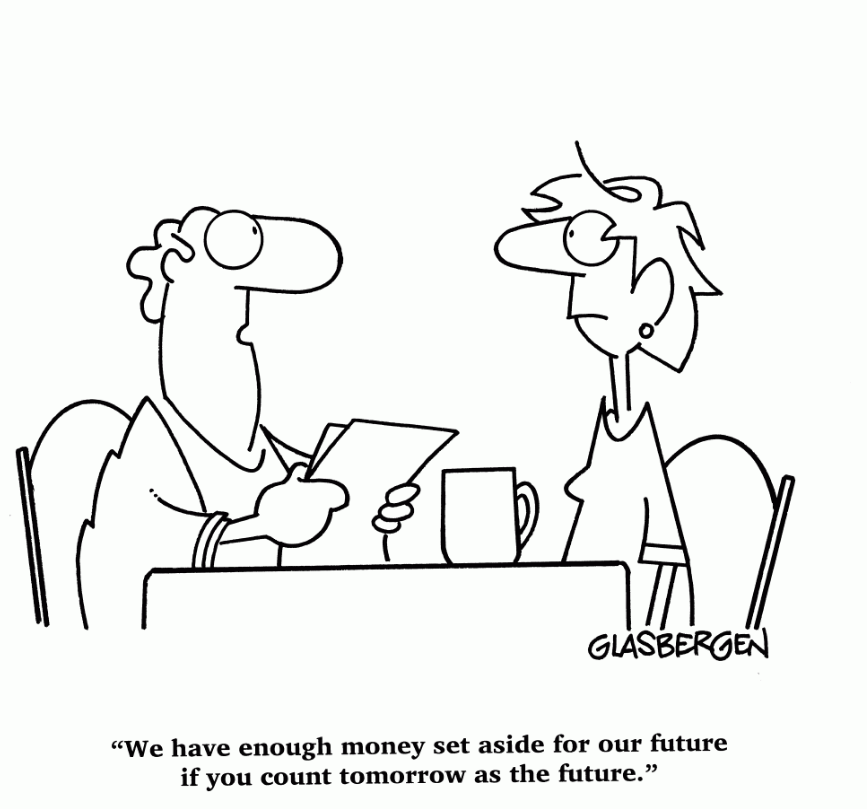
When the future feels predictable, saving looks sensible. When the future feels uncertain, saving becomes more important, not less. Not because we know what is coming, but because we do not.
If there is an encouraging message in this research – and I think there is – it is that younger employees are not asking employers to solve climate change, war, or the world’s other problems through the group RRSP. They are asking for practical ways to become more resilient in spite of them. Pension professionals, plan sponsors, and advisors ought to be able to work with that.
The future has always been uncertain. Perhaps younger generations are simply more conscious of that uncertainty – and are reminded of it more often – than earlier generations were at the same age.
And perhaps that’s the real lesson from this research: The value of saving has never been certainty – it’s having options when uncertainty arrives.


Comments